2040–2044 provisional mandate
Convened by Leena Varga
The Alliance Council is recallable, term-limited, and split between citizen-elected delegates, member-community stewards, and independent rights guardians.
Meet the councilTransmission from 2040 · Alliance public relay
Maximum freedom. Shared abundance. No domination.
A 2040 international alliance of federated communities, civic colonies, cooperatives, and public-interest technology — built to make freedom real beyond borders, monopolies, and machines.
Signal brief
Futurekind Alliance is an international federation where survival is not conditional on obedience, civic colonies are self-governing rather than imperial, technology reduces toil instead of concentrating power, and democracy remains legible enough for citizens to control.
Not merely fewer rules, but fewer masters: no domination by poverty, monopoly, borders, bureaucracy, violence, platforms, colonies, or machines.
Cooperative automation, public-interest infrastructure, and commons trusts turn productivity into freedom time and universal security.
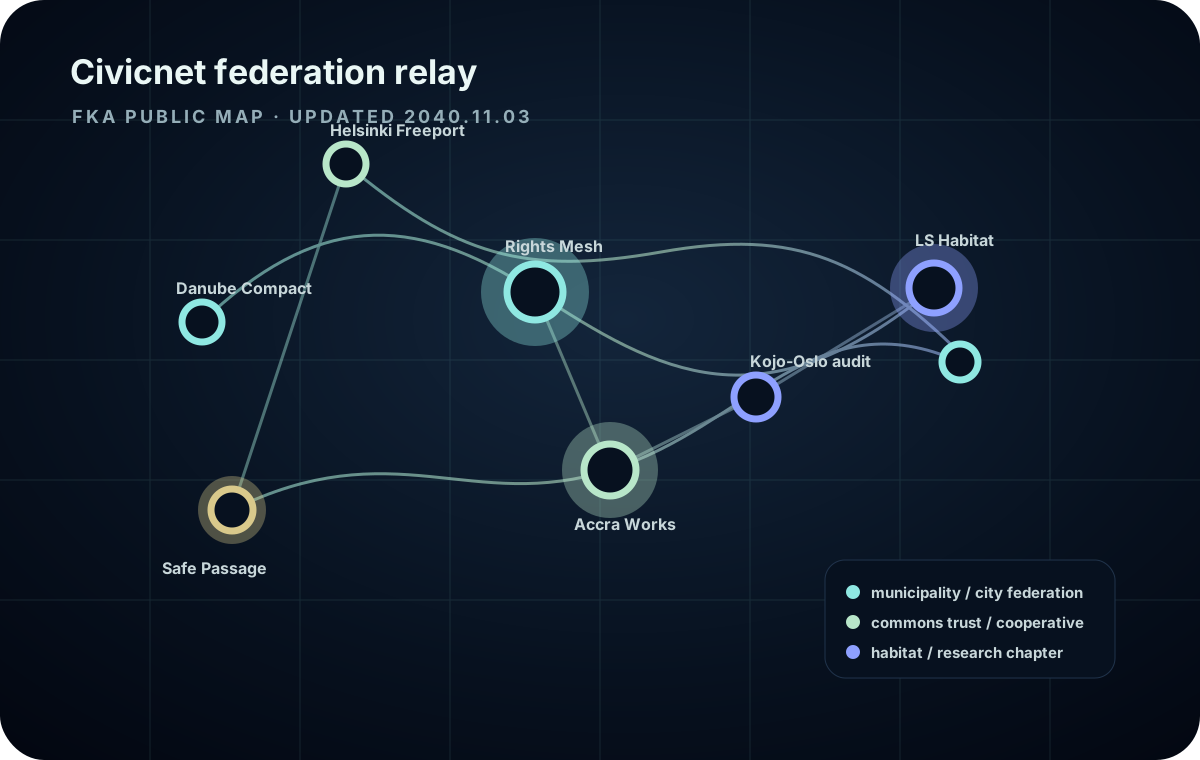
Cities, habitats, settlements, and cooperatives stay locally rooted while sharing rights, infrastructure, and peaceful exit.
Federation snapshot
The 2040 version should feel like a functioning institution: concrete membership numbers, accountable leaders, and constitutional limits on what leadership can do.
2040–2044 provisional mandate
The Alliance Council is recallable, term-limited, and split between citizen-elected delegates, member-community stewards, and independent rights guardians.
Meet the councilPrinciples
Short enough to scan, demanding enough to shape institutions across borders and colonies.
Coercion requires proof. Law, bureaucracy, markets, borders, algorithms, and mobs must justify every limit they place on a person.
Experts, delegates, and AI systems can reduce cognitive load, but final political authority remains with citizens and rights-bearing people.
Post-scarcity is a horizon, not a magic switch. Start with food, shelter, healthcare, education, energy, safety, connectivity, and tools.
Automation should reduce toil and dependence, not create robot aristocracy, landlord empires, or a permanent precariat.
People need rooted community and meaningful participation, while climate, technology, peace, migration, and off-world settlement require federated cooperation.
Human dignity is not issued by a passport, chain, employer, party, platform, local majority, or colony charter. Voice grows through participation.
Policy pillars
Each pillar converts the philosophy into a design question for law, infrastructure, member communities, and public institutions.
Treat poverty, violence, monopoly, bureaucracy, border precarity, platform lock-in, colony dependency, and automated decisions as freedom problems, not side issues.
Use AI to forecast, simulate, translate, coordinate logistics, expose trade-offs, and audit power. No black-box sovereignty or unappealable rights decisions.
Make money less necessary for dignity by reducing survival scarcity first: homes, food, care, energy, connectivity, education, and civic tools.
Help worker and user cooperatives automate toil, then federate mature essential systems into commons trusts with multi-stakeholder governance.